The Client-as-Hero Model
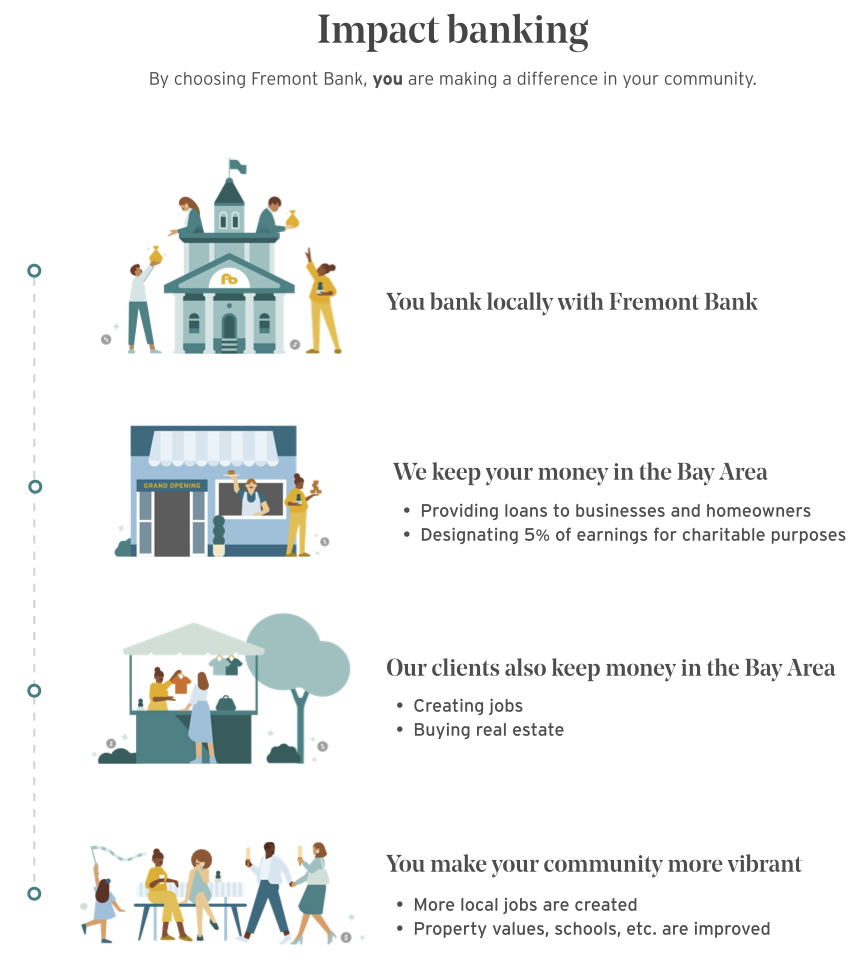
When the company steps back and lets the client or community take the lead, attention and trust follow.
THE IDEA
The most effective thing a brand can do isn't telling its own story — it's making the customer the hero and positioning itself as the enabler of their success. This is especially true in financial services, where institutional messaging is the norm and trust is the actual product.
WHERE IT CAME FROM
When I joined Fremont Bank, the brand was genuinely client-focused — but the messaging wasn't. It followed the legacy financial services playbook: institution-forward, feature-heavy, self-referential. I saw the gap between what the bank actually did for clients and how it talked about itself, and built a positioning model to close it.
THE PROOF
Rather than wait for full organizational buy-in, I put the model into practice.
The Beer Baron campaign gave the bank's platform to a client — telling their growth story, from a single cooler to a multimillion-dollar business, with the bank as the implicit enabler. Engagement came in at 2x+ above target.
The HQ launch anchored a multi-channel campaign around a community block party — positioning the bank as a long-term community partner rather than a financial institution opening a branch. Deposits reached 220% of target.
THE PATTERN
When the company steps back and lets the client or community take the lead, attention and trust follow. Across both examples, the results weren't incremental — they were multiples of the target.